RAnDOOm
-
Posts
3,344 -
Joined
-
Last visited
-
Days Won
234





![Pavel_[RUS74]](https://cmp-gaming.com/uploads/monthly_2019_10/LupoMarine.thumb.jpg.dce8018f5196df07666c1feff7a910b1.jpg)
Recent Profile Visitors
28,833 profile views


RAnDOOm's Achievements

-
CMP's 19th FH2 Campaign: Mare Nostrum Has Ended!
RAnDOOm replied to Quicksilver's topic in General Announcements
Thank you to everyone that joined this campaign! A special thank you also to @Quicksilver for all his work. -
FH2 Campaign #19 "Mare Nostrum" Has Ended! Thank You for Joining!
RAnDOOm replied to RAnDOOm's topic in General Announcements

-
Share your opinions about the battle. Replies are ok but no flaming, keep it clean! Copy and paste below: Best: - Worst: - Funniest: - Most hated player: - Most loved/liked player: - Battle Photo Medal - ( read below for more information ) https://cmp-gaming.com/topic/7312-battle-photo-medal/
-
FH2 Campaign #19 "Mare Nostrum" Has Ended! Thank You for Joining!
RAnDOOm replied to RAnDOOm's topic in General Announcements
-
Share your opinions about the battle. Replies are ok but no flaming, keep it clean! Copy and paste below: Best: - Worst: - Funniest: - Most hated player: - Most loved/liked player: - Battle Photo Medal - ( read below for more information ) https://cmp-gaming.com/topic/7312-battle-photo-medal/
-
The list needs to be updated manually. @Quicksilverwill do it soon.
-
FH2 Campaign #19 - Mare Nostrum: Battle #13 Monte Cassino
RAnDOOm posted an event in Forgotten Hope 2
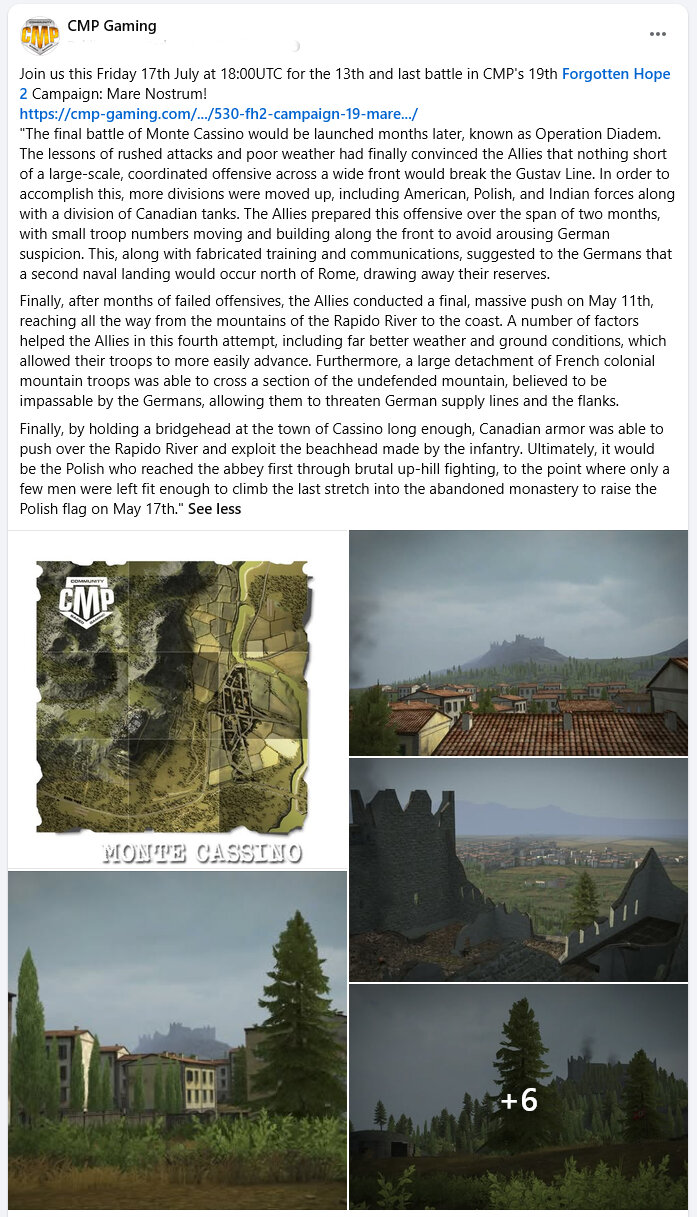
untilCMP FH2 Campaign #19: Mare Nostrum Battle #13: Monte Cassino History "The final battle of Monte Cassino would be launched months later, known as Operation Diadem. The lessons of rushed attacks and poor weather had finally convinced the Allies that nothing short of a large-scale, coordinated offensive across a wide front would break the Gustav Line. In order to accomplish this, more divisions were moved up, including American, Polish, and Indian forces along with a division of Canadian tanks. The Allies prepared this offensive over the span of two months, with small troop numbers moving and building along the front to avoid arousing German suspicion. This, along with fabricated training and communications, suggested to the Germans that a second naval landing would occur north of Rome, drawing away their reserves. Finally, after months of failed offensives, the Allies conducted a final, massive push on May 11th, reaching all the way from the mountains of the Rapido River to the coast. A number of factors helped the Allies in this fourth attempt, including far better weather and ground conditions, which allowed their troops to more easily advance. Furthermore, a large detachment of French colonial mountain troops was able to cross a section of the undefended mountain, believed to be impassable by the Germans, allowing them to threaten German supply lines and the flanks. Finally, by holding a bridgehead at the town of Cassino long enough, Canadian armor was able to push over the Rapido River and exploit the beachhead made by the infantry. Ultimately, it would be the Polish who reached the abbey first through brutal up-hill fighting, to the point where only a few men were left fit enough to climb the last stretch into the abandoned monastery to raise the Polish flag on May 17th." --- --- --- --- -
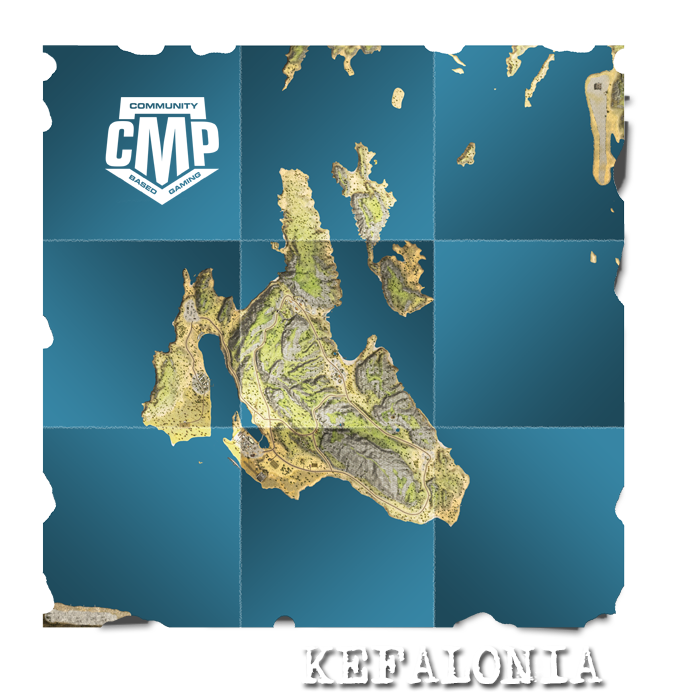
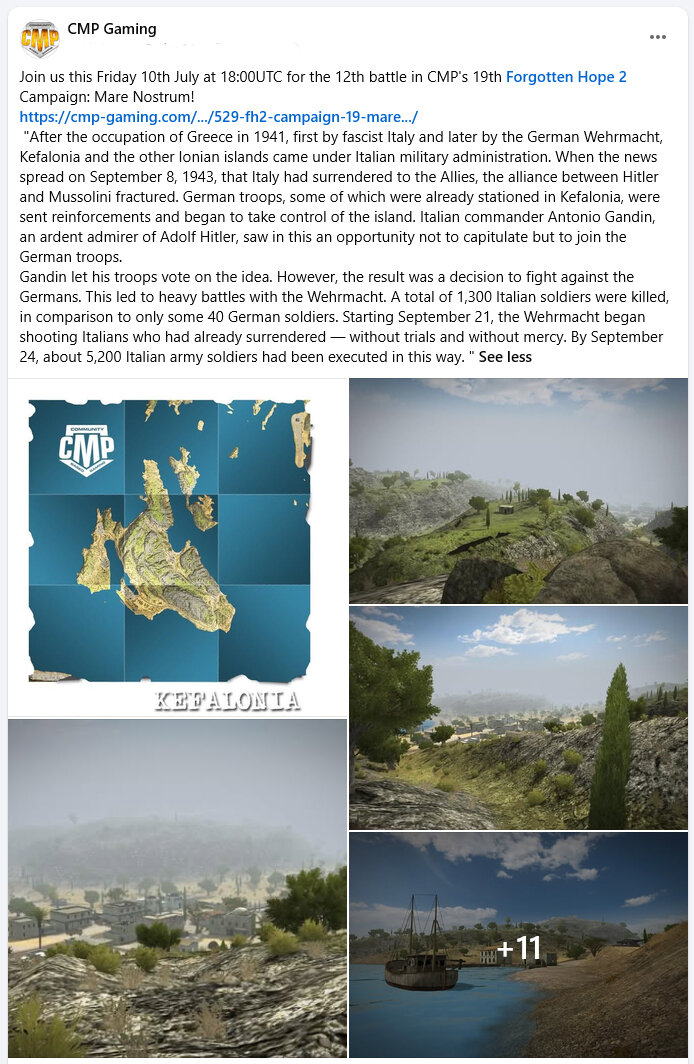
untilCMP FH2 Campaign #19: Mare Nostrum Battle #12: Kefalonia History "After the occupation of Greece in 1941, first by fascist Italy and later by the German Wehrmacht, Kefalonia and the other Ionian islands came under Italian military administration. When the news spread on September 8, 1943, that Italy had surrendered to the Allies, the alliance between Hitler and Mussolini fractured. German troops, some of which were already stationed in Kefalonia, were sent reinforcements and began to take control of the island. Italian commander Antonio Gandin, an ardent admirer of Adolf Hitler, saw in this an opportunity not to capitulate but to join the German troops. Gandin let his troops vote on the idea. However, the result was a decision to fight against the Germans. This led to heavy battles with the Wehrmacht. A total of 1,300 Italian soldiers were killed, in comparison to only some 40 German soldiers. Starting September 21, the Wehrmacht began shooting Italians who had already surrendered — without trials and without mercy. By September 24, about 5,200 Italian army soldiers had been executed in this way. " --- --- --- --- --- --- ---
-
FH2 Campaign #19 "Mare Nostrum" Has Ended! Thank You for Joining!
RAnDOOm replied to RAnDOOm's topic in General Announcements
-
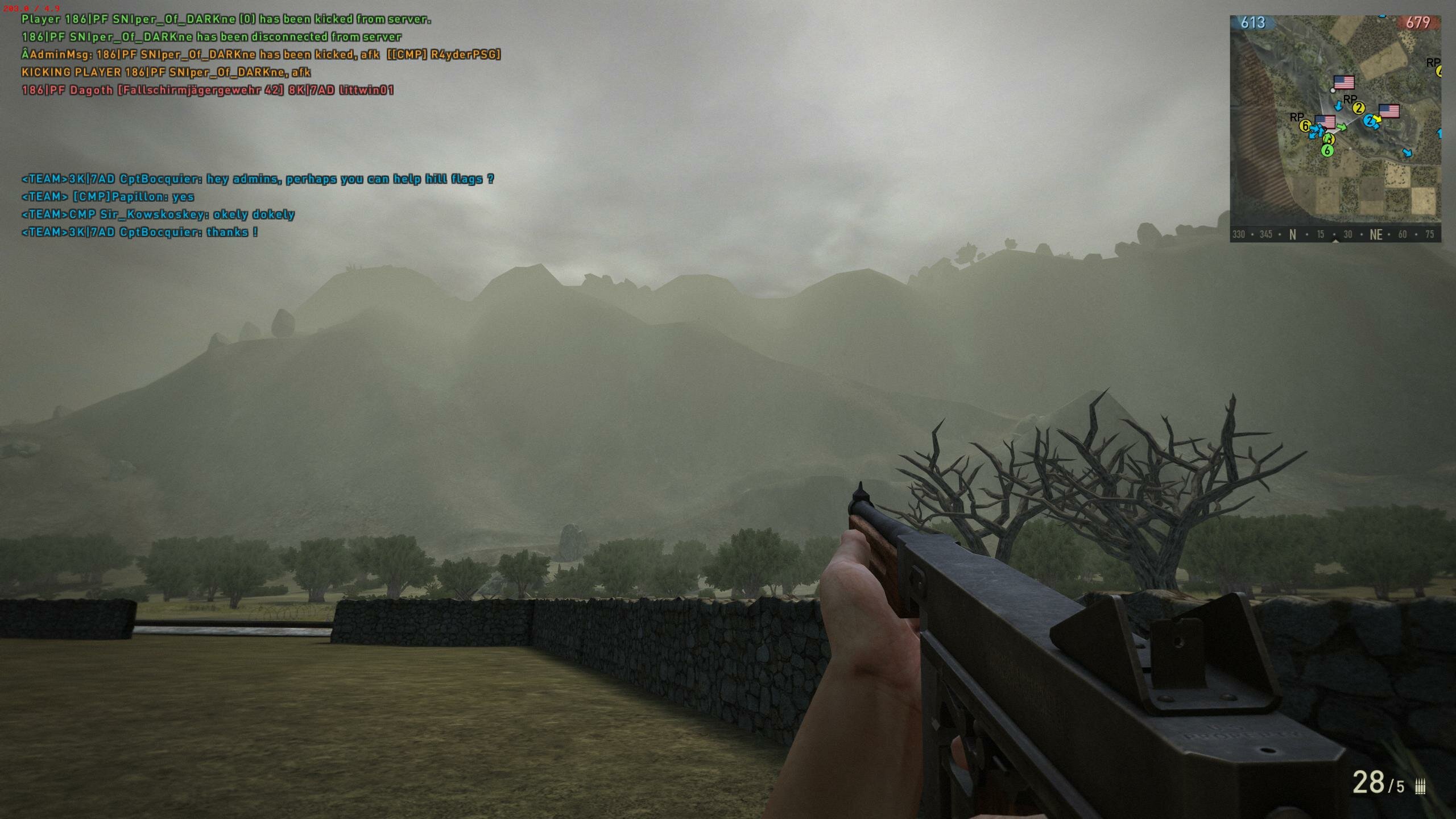
Best: - Playing FH2 in Tournament is always fun. Worst: - Some map problems. It happens. First time in this campaign. Funniest: - Some people pushing other people below the mountains. Most hated player: - The mountains Most loved/liked player: - Everyone Battle Photo Medal - "Big mountains ^^" ( read below for more information ) https://cmp-gaming.com/topic/7312-battle-photo-medal/
- 1 reply
-
- 2
-

-

-
Share your opinions about the battle. Replies are ok but no flaming, keep it clean! Copy and paste below: Best: - Worst: - Funniest: - Most hated player: - Most loved/liked player: - Battle Photo Medal - ( read below for more information ) https://cmp-gaming.com/topic/7312-battle-photo-medal/
-
FH2 Campaign #19 "Mare Nostrum" Has Ended! Thank You for Joining!
RAnDOOm replied to RAnDOOm's topic in General Announcements
-
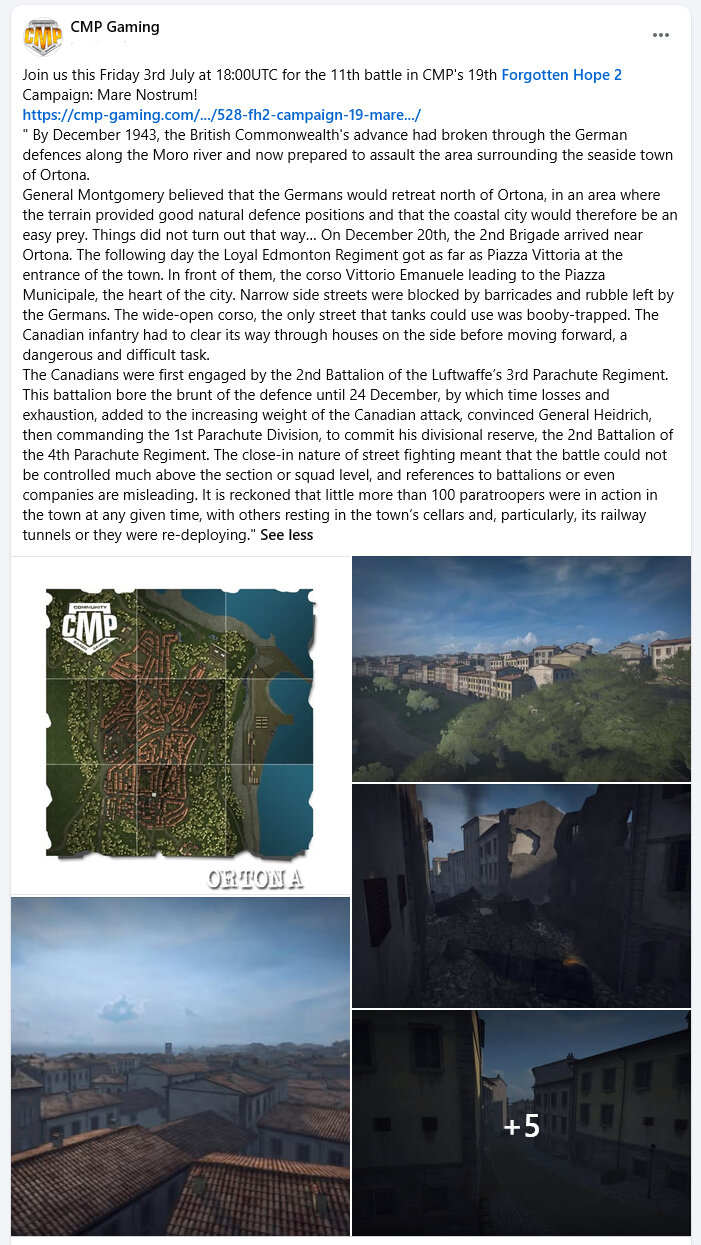
untilCMP FH2 Campaign #19: Mare Nostrum Battle #11: Ortona History " By December 1943, the British Commonwealth's advance had broken through the German defences along the Moro river and now prepared to assault the area surrounding the seaside town of Ortona. General Montgomery believed that the Germans would retreat north of Ortona, in an area where the terrain provided good natural defence positions and that the coastal city would therefore be an easy prey. Things did not turn out that way… On December 20th, the 2nd Brigade arrived near Ortona. The following day the Loyal Edmonton Regiment got as far as Piazza Vittoria at the entrance of the town. In front of them, the corso Vittorio Emanuele leading to the Piazza Municipale, the heart of the city. Narrow side streets were blocked by barricades and rubble left by the Germans. The wide-open corso, the only street that tanks could use was booby-trapped. The Canadian infantry had to clear its way through houses on the side before moving forward, a dangerous and difficult task. The Canadians were first engaged by the 2nd Battalion of the Luftwaffe’s 3rd Parachute Regiment. This battalion bore the brunt of the defence until 24 December, by which time losses and exhaustion, added to the increasing weight of the Canadian attack, convinced General Heidrich, then commanding the 1st Parachute Division, to commit his divisional reserve, the 2nd Battalion of the 4th Parachute Regiment. The close-in nature of street fighting meant that the battle could not be controlled much above the section or squad level, and references to battalions or even companies are misleading. It is reckoned that little more than 100 paratroopers were in action in the town at any given time, with others resting in the town’s cellars and, particularly, its railway tunnels or they were re-deploying." --- --- --- ---
-
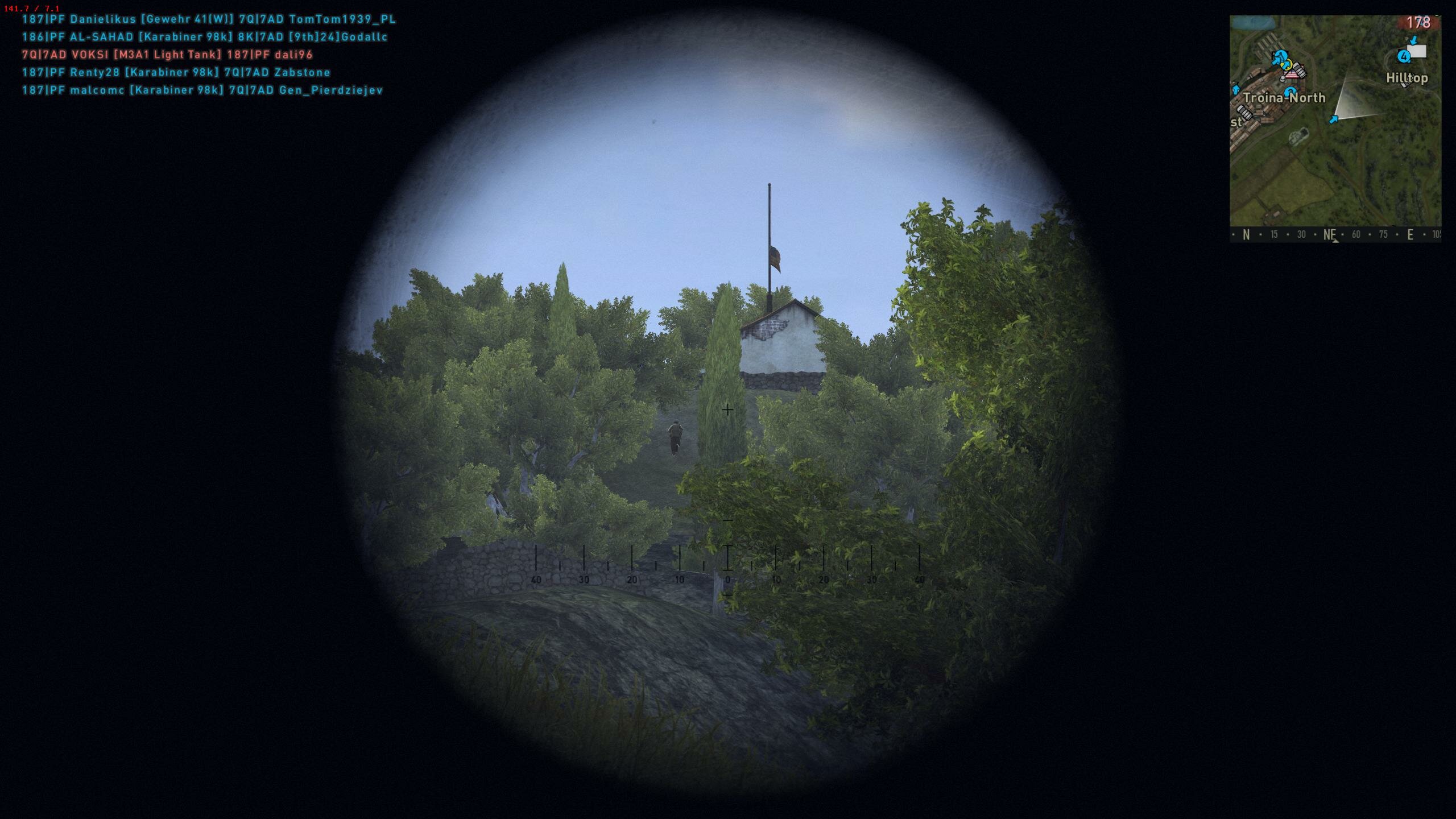
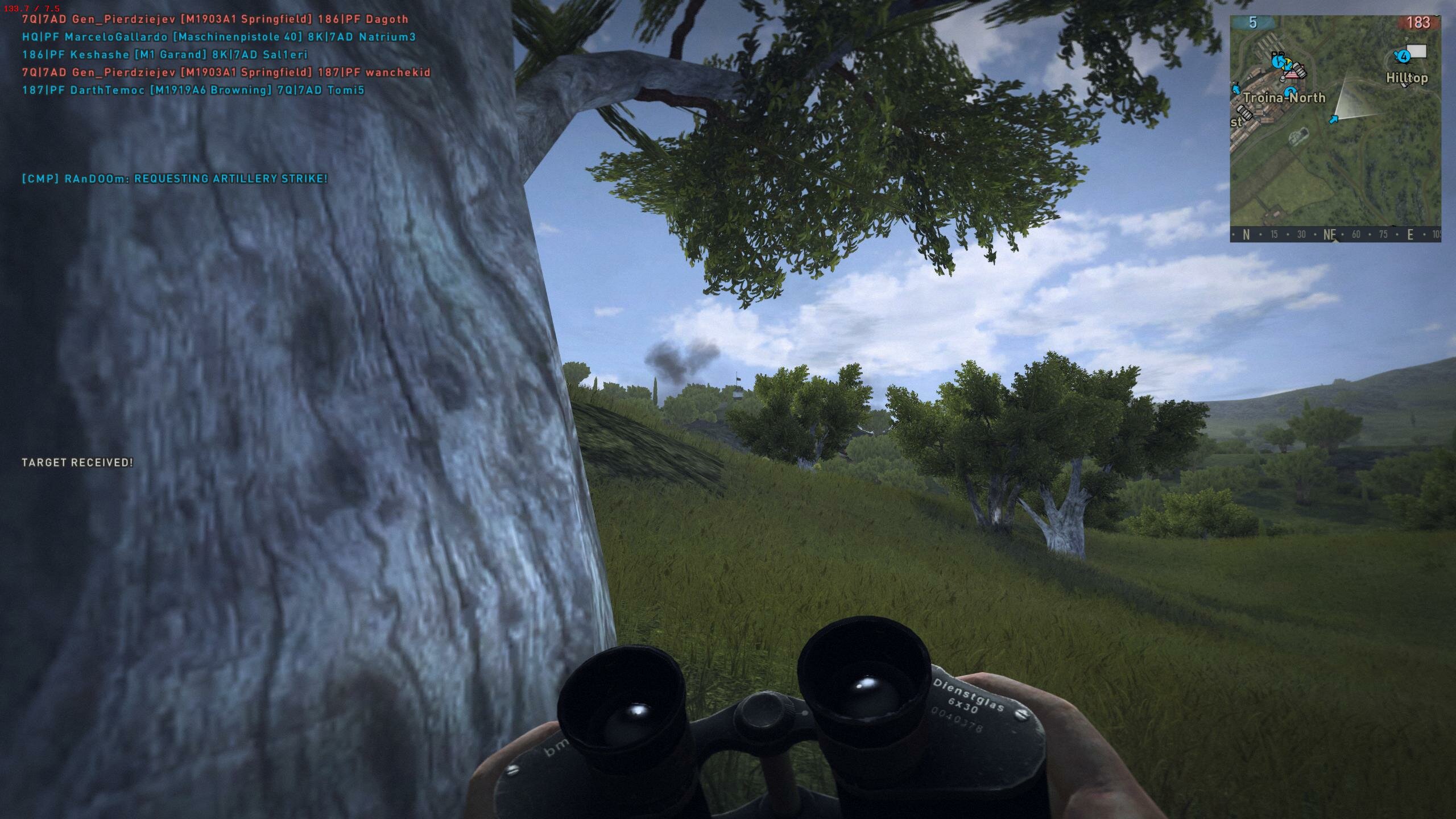
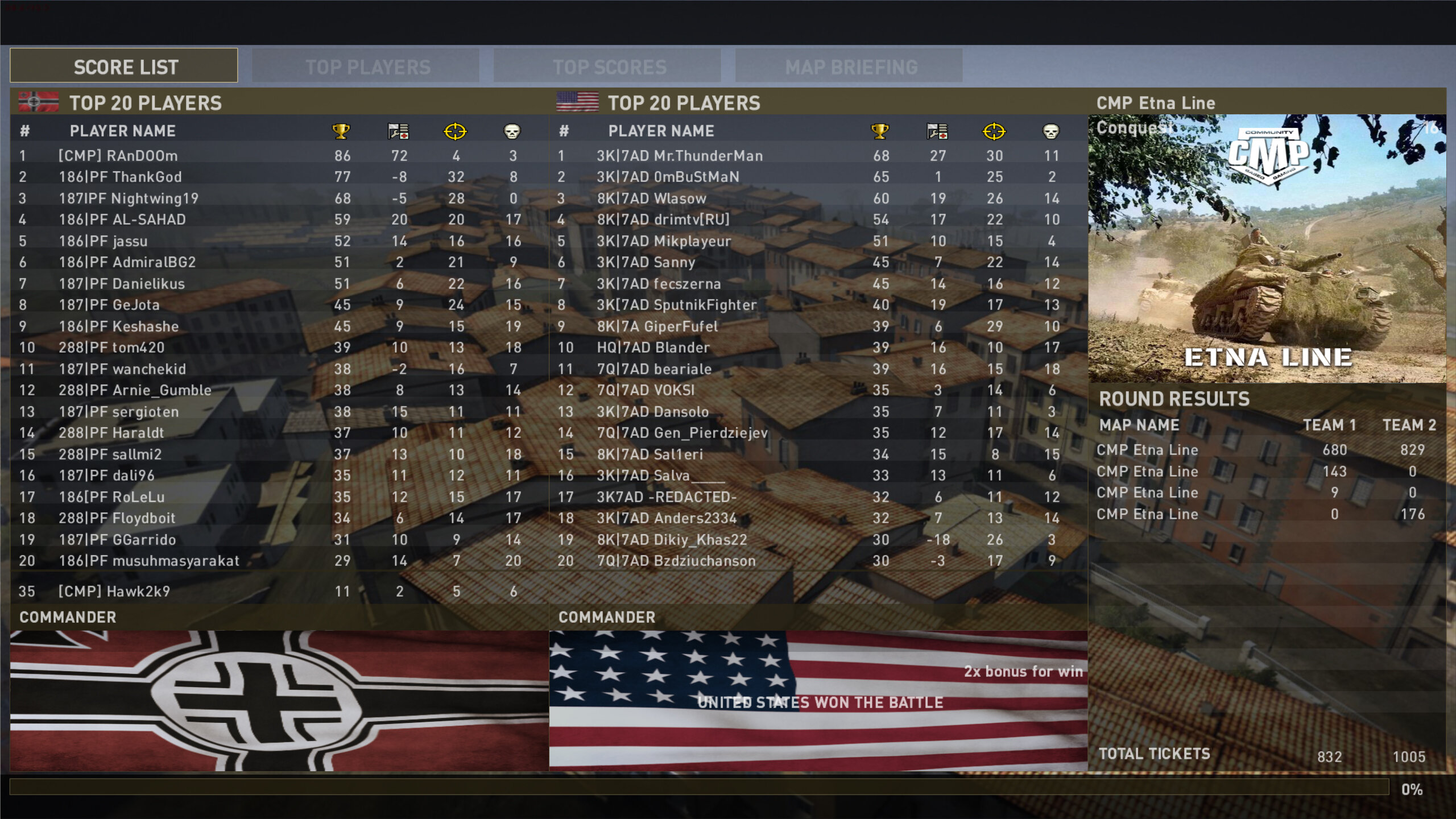
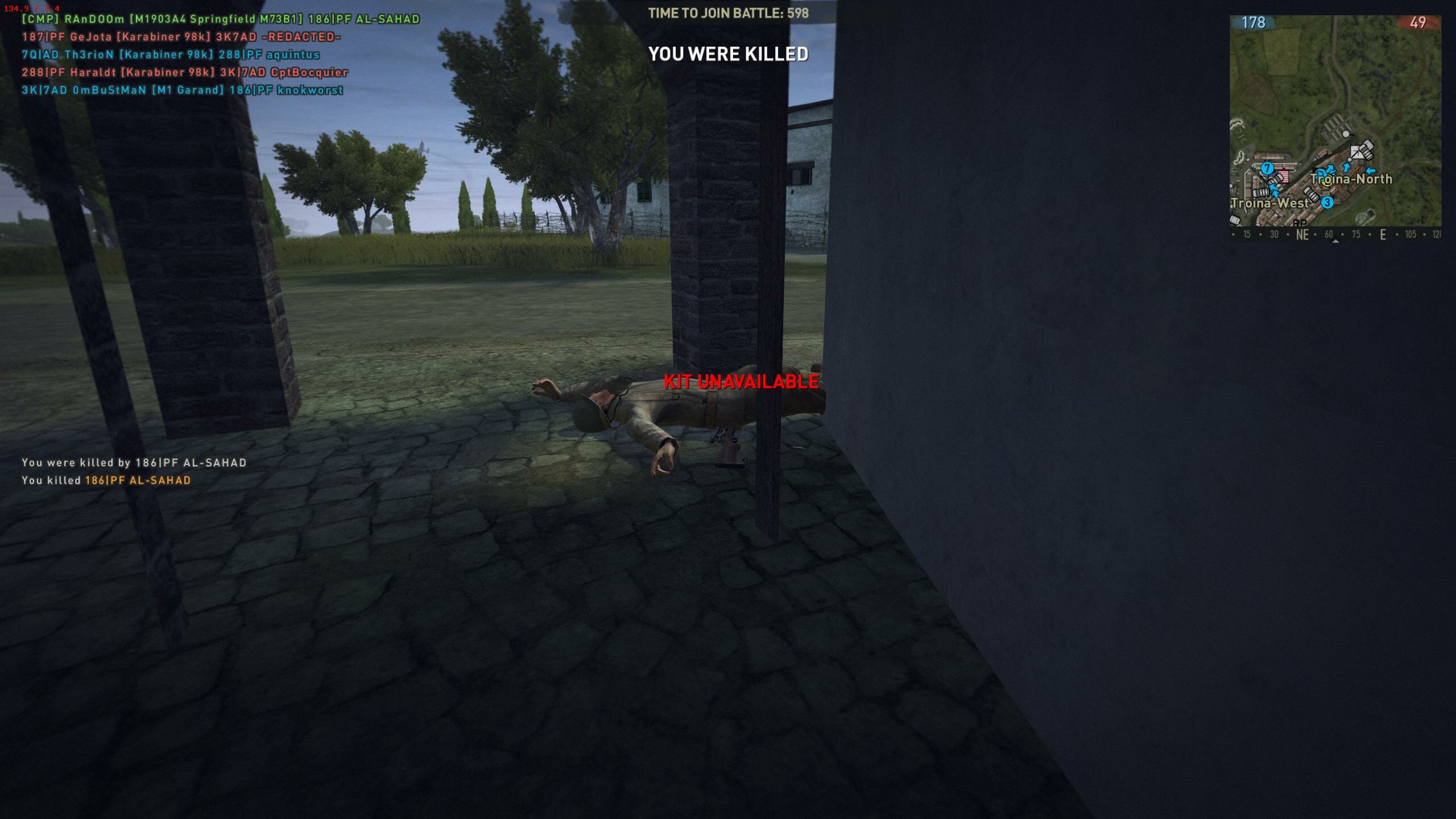
Best: - Me being the best player in round 3. That is cool and funny. Worst: - People still dont know that after your cap a flag you need to defend it for at least 2min. Funniest: - Me being the best player in round 2. That is cool and funny. Most hated player: - No one Most loved/liked player: - @Papillonfor doing very good changes for this already great map. Battle Photo Medal - ( read below for more information ) https://cmp-gaming.com/topic/7312-battle-photo-medal/ "Great position. Spot for Arty. Help your team." Also me and @AL-SAHADdouble kill.
-
Share your opinions about the battle. Replies are ok but no flaming, keep it clean! Copy and paste below: Best: - Worst: - Funniest: - Most hated player: - Most loved/liked player: - Battle Photo Medal - ( read below for more information ) https://cmp-gaming.com/topic/7312-battle-photo-medal/